

Is Your Shoulder Limiting Your Golf Game? Subtle Signs You Should Not Ignore
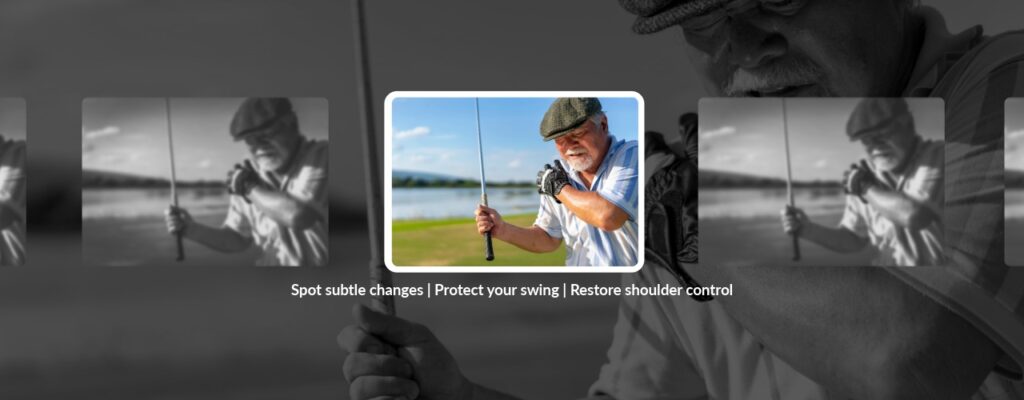
Most golfers do not notice a shoulder problem until the swing tells them something is wrong. Club speed drops. The backswing shortens. Impact feels like bracing instead of rotating. Shoulder pain in golfers tends to build slowly, which is exactly why it catches people off guard. By the time it is obvious, the body has already been compensating for a while.
The Quiet Ways a Shoulder Problem Shows Up on the Course
Shoulder pain in golfers rarely starts with dramatic pain. They show up as performance changes first. A turn that feels tighter than it used to. A pull or ache at the top of the backswing that was not there last season. Discomfort that settles in during the drive home and feels fine by morning, just enough to rationalize playing through it again next weekend.
These are not signs of aging or poor technique. They are signs that the shoulder is absorbing load it was not designed to handle alone.
Why the Problem Keeps Coming Back
Shoulder pain in golfers tends to persist when the physical contributors are not identified and addressed directly. Several things commonly work against the shoulder during the golf swing.
Tightness in the back of the shoulder limits how far the lead arm can rotate through impact. This changes the swing path and increases compression inside the joint. When the rotator cuff is not activating with enough strength or timing, the shoulder joint moves without adequate control during the high-speed demands of the downswing and follow-through. Mid-back stiffness reduces how much spinal rotation is available during the backswing. When the thoracic spine cannot rotate freely, the shoulder is forced to make up the difference with extra arm movement. Each of these problems feeds the others.
How Hope Physical Therapy Can Help
A golf-focused shoulder evaluation at Hope Physical Therapy looks beyond where it hurts. Your therapist assesses how much motion the lead shoulder has and how that limitation affects your swing mechanics.
- Rotator cuff strength and activation under load are tested to identify the control deficits that allow the joint to be overloaded during play.
- Shoulder blade movement during arm elevation is examined because blade mechanics directly affect how the shoulder handles rotational force.
- Cervical and thoracic restrictions are assessed to determine how much compensatory demand they are placing on the shoulder during the backswing.
What to Expect From Treatment
Treatment for shoulder pain in golfers at Hope Physical Therapy is matched to the evaluation and typically includes:
- Shoulder mobility work that restores the rotation in the lead arm to move freely through impact without forcing compensation.
- Rotator cuff and shoulder blade strengthening that rebuilds the dynamic control that keeps the glenohumeral joint from absorbing excessive force during the downswing.
- Manual therapy directed at the mid-back that restores the thoracic rotation that reduces the compensatory arm movement currently overloading the shoulder.
- Swing mechanics coaching that translates the physical changes from treatment into better movement patterns on the course, so the shoulder is supported rather than stressed with every swing.
Playing a Long Game With a Healthy Shoulder
The shoulder does not have to be the thing you manage your golf around. For most golfers dealing with these symptoms, the underlying contributors are specific, addressable, and well understood by the team at Hope Physical Therapy.
Shoulder pain in golfers that has been properly assessed and rehabilitated does not just hurt less; it works better and stops being the reason a round ends early. Contact Hope Physical Therapy to schedule your evaluation and find out what your shoulder needs to become an asset in your swing again.